
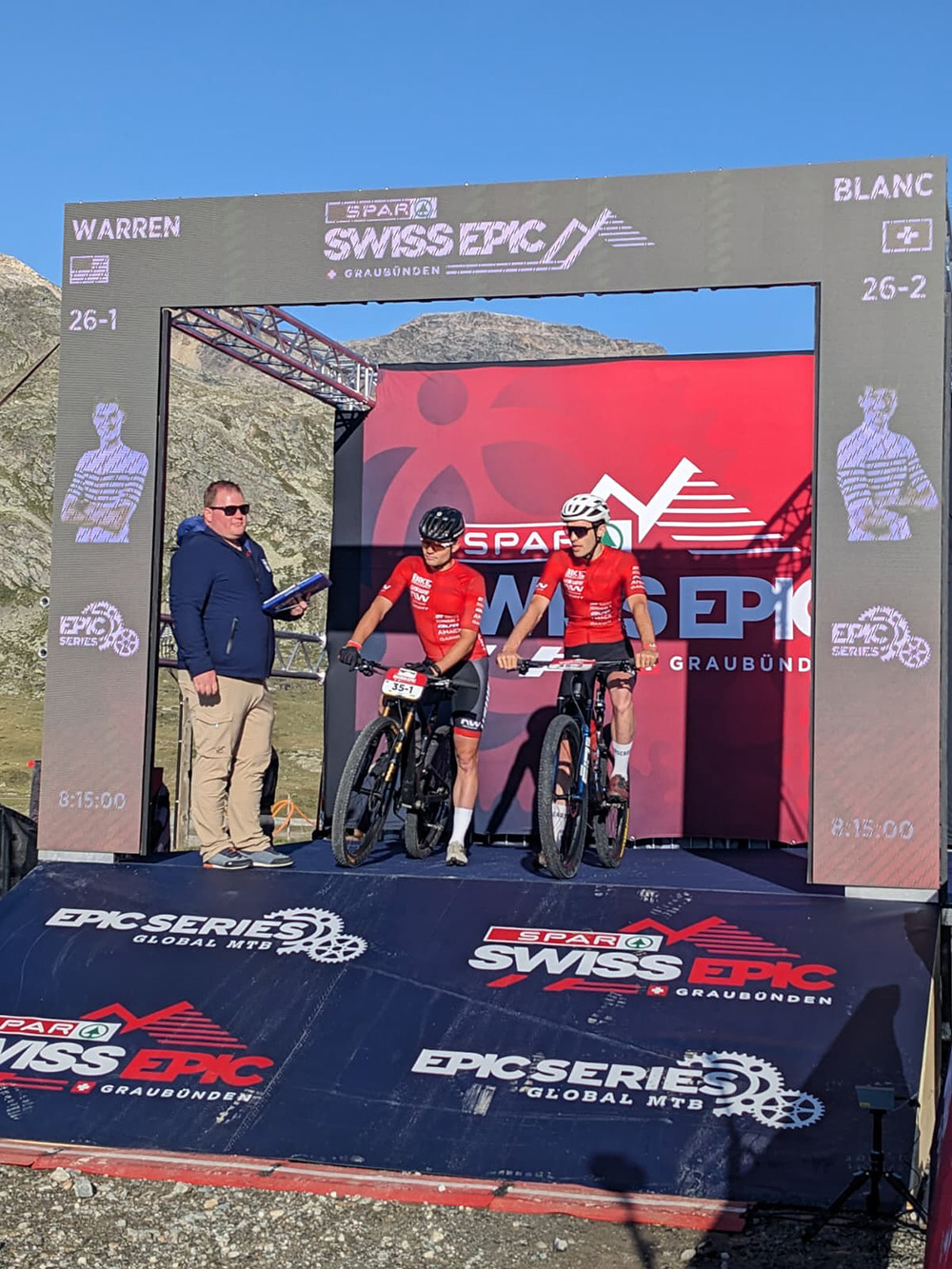
Some races don’t just get marked on the calendar – they carve themselves into your memory. The Swiss Epic is definitely one of them: five days packed with effort, emotion, breathtaking trails, and unforgettable views, all set against the stunning backdrop of the Swiss Alps.
No wonder this event is considered the world’s toughest and most prestigious mountain bike stage race right after the Cape Epic.
The 2025 edition brought 307 kilometers, 9450 meters of climbing, and terrain that pushed even seasoned riders to their limits, with technical singletrack and high-altitude sections well above 2000 meters.
For us – Aaron and Niclas – it wasn’t our first big stage race, yet it felt like stepping into something entirely new. The Alps make their own rules: unpredictable weather, brutal climbs, rugged trails – and that incredible beauty you can’t find anywhere else.
Contents
Day 1 – The Queen Stage to Start It All
We kicked things off in Davos with a brutal start: 78 kilometers, 2400 meters of climbing, and temperatures hitting 30°C. Beginning a stage race with the hardest day is unusual – but that’s exactly what made it special. Everyone immediately knew what kind of week this was going to be.
We started strong and stayed around 25th position early on. But as we reached the Albula Pass, a towering climb, Niclas had to ease off. High altitude has always been a challenge for him, and this was no exception.
That’s where the essence of stage racing comes in: it’s not about individual performance, but the strength of the team. We adjusted, climbed together, and even managed to regain a few positions toward the top.
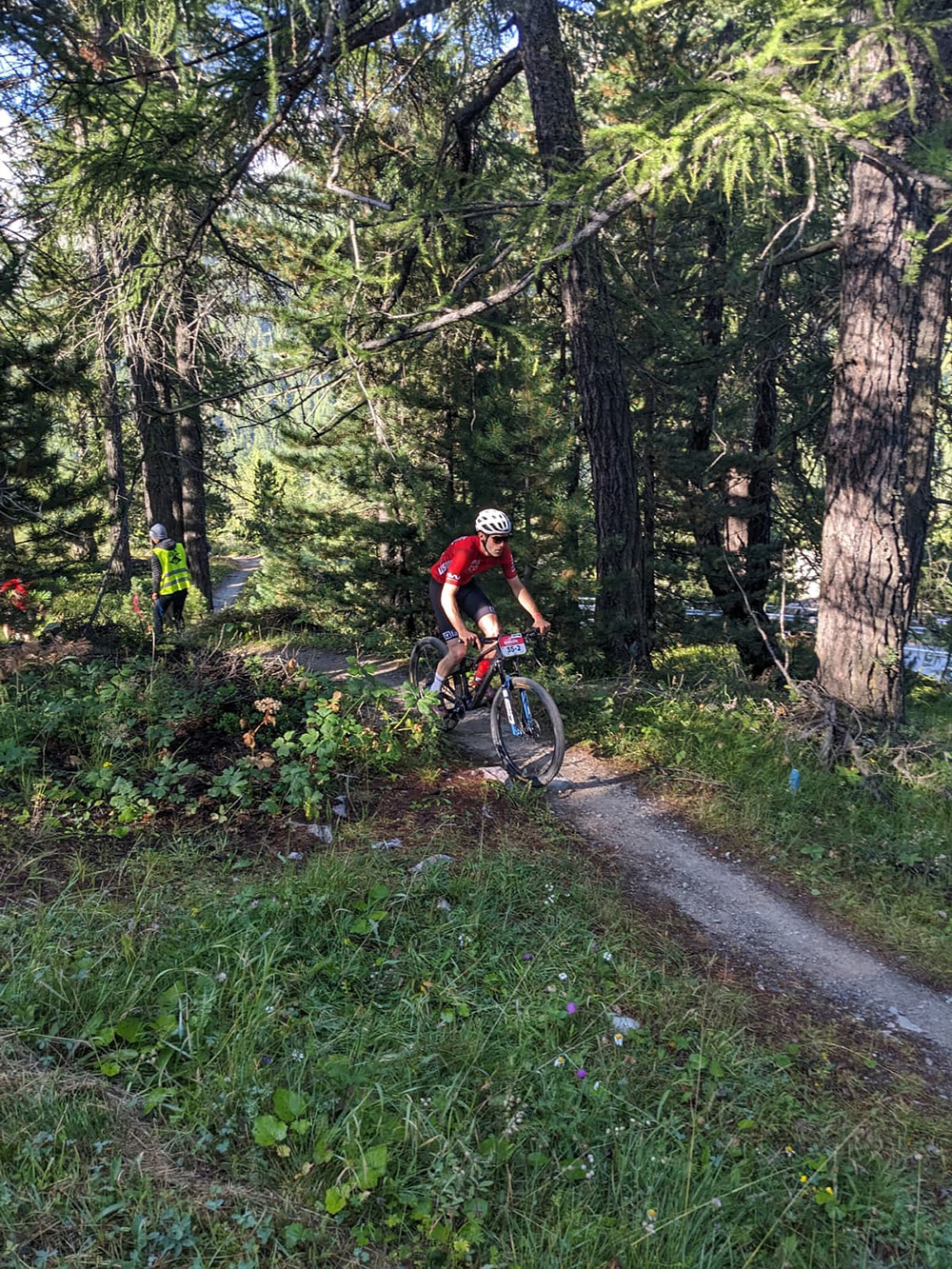
We crossed the finish line in 32nd place – not a dream start, but solid. And we were rewarded with a descent from the Albula Pass that was pure mountain bike bliss: twisty, rocky, rooty, and framed by scenery straight out of a postcard.
Day 2 – Altitude Makes All the Difference
Stage two took us around La Punt: 61 kilometers, 1950 meters of climbing, and almost the entire route above 2000 meters elevation – an entirely different kind of challenge.
The first climb already pushed us above the treeline. At the top, a long technical trail awaited – rideable, but demanding.
For Niclas, this was the toughest day. The thin air drained his power, and Aaron had to keep adjusting the pace to stay together.
The undisputed highlight was the Olympia Trail, dropping from 2500 meters – fast, flowy, and just pure riding joy.
We finished the stage in 37th place, having lost quite a bit of time. But the atmosphere remained positive: perfect weather, mind-blowing scenery, and the shared experience of pushing through as a team outweighed any numbers.
Day 3 – Time Trial on the Bernina Pass
Day three brought a format that’s always a bit special in a stage race: the time trial. No pack tactics, just pacing and perfect team coordination.
The course started at 2300 meters on the Bernina Pass, dropping down over 55 kilometers with 1200 meters of climbing and a whopping 1800 meters of descending back to La Punt.
The first 20 kilometers were all about fast, technical singletrack – mostly downhill. We chose a conservative line to avoid crashes or mechanicals, which proved to be a wise decision. Other teams took risks and paid the price.
From kilometer 20 onward, the terrain became more rolling, with short climbs that suited us well. We gained time and passed several teams. The only long climb came around kilometer 35. Niclas pushed through mentally, targeting kilometer 42 as his breaking point. After that, Aaron took over the pace on the flatter sections and led us into the finish line.
Result: 25th place – our best stage result and proof that we were working like a well-oiled machine.
Day 4 – Over the Scalettapass
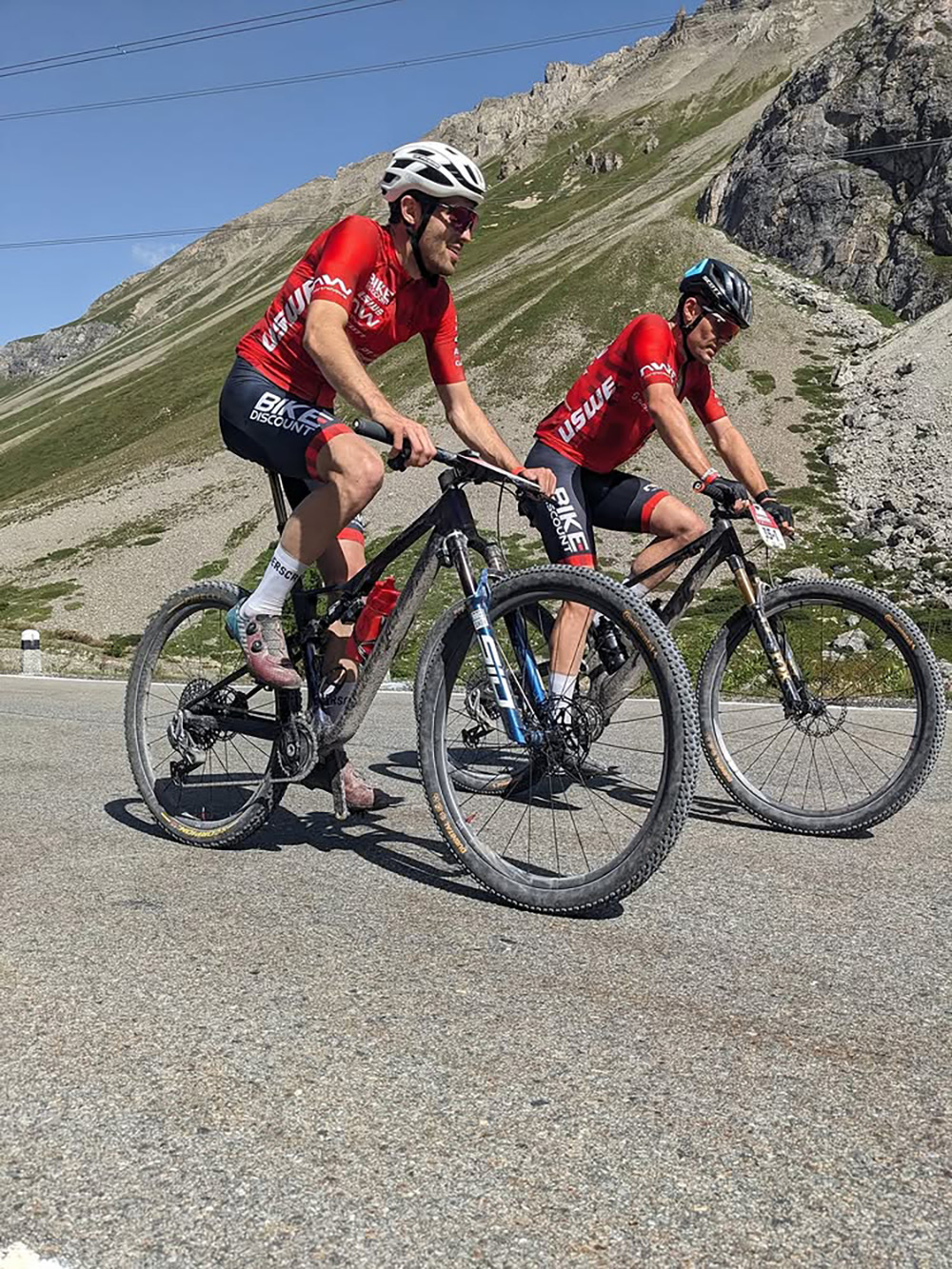
The dreaded day for many – and for Niclas too. On the agenda: the mighty Scalettapass at 2600 meters, one of the highest rideable MTB passes in Switzerland.
Due to incoming thunderstorms, the stage was shortened to 52 kilometers and 1700 meters of climbing – but it didn’t make it any easier.
The first part rolled fast, but at kilometer 23 the climbing began: first gravel, then from kilometer 28 a steep, slippery trail. The rain turned the terrain into a slick mess. We had to hike sections – a true test of patience.
We crested the pass in 25th position, but the descent was intense: 20 kilometers of technical, wet, and risky downhill. Once again, we chose safety over heroics. Some teams went full-send and crashed out.
We finished in 31st place – a result we were content with, given the conditions.
For many amateur riders, it got even tougher – their race was neutralized at the base of the pass due to lightning risk. Once again, the Alps reminded everyone: anything can happen.
Day 5 – Final Stage in Davos
On paper, it looked short: 49 kilometers and 2000 meters of climbing. But it was a true test of endurance.
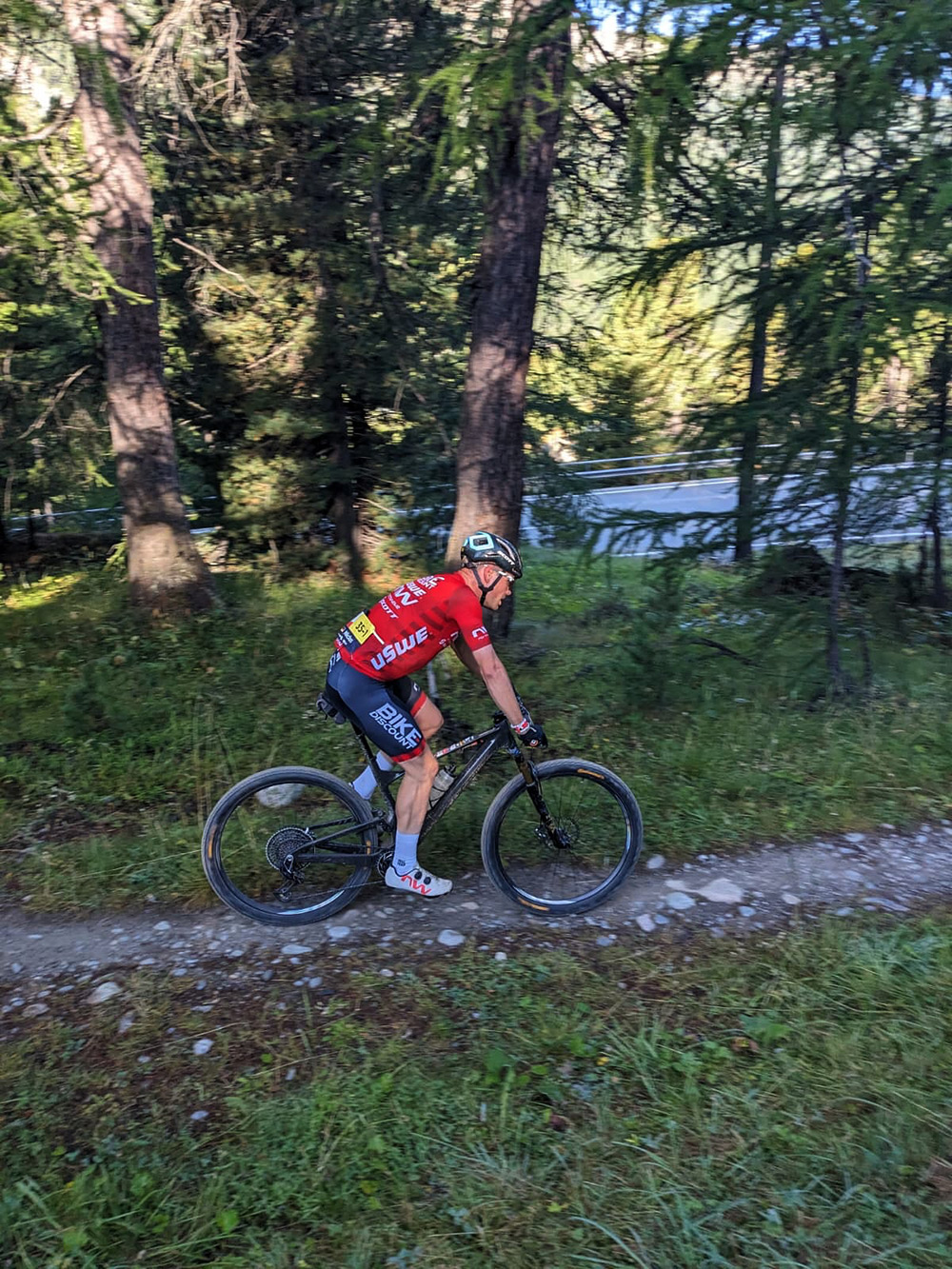
The stage began with a long ascent from Davos up to the Panorama Trail at 2300 meters. Sunshine greeted us at the top, and the trail lived up to its name: fast, flowy, and simply stunning.
But minutes later, we plunged into dense fog and wet conditions. The trails turned slippery, rooty, and unpredictable. Several teams crashed; some even had to abandon.
Niclas, drained from the previous days, handled the descent safely, even if he was riding on fumes.
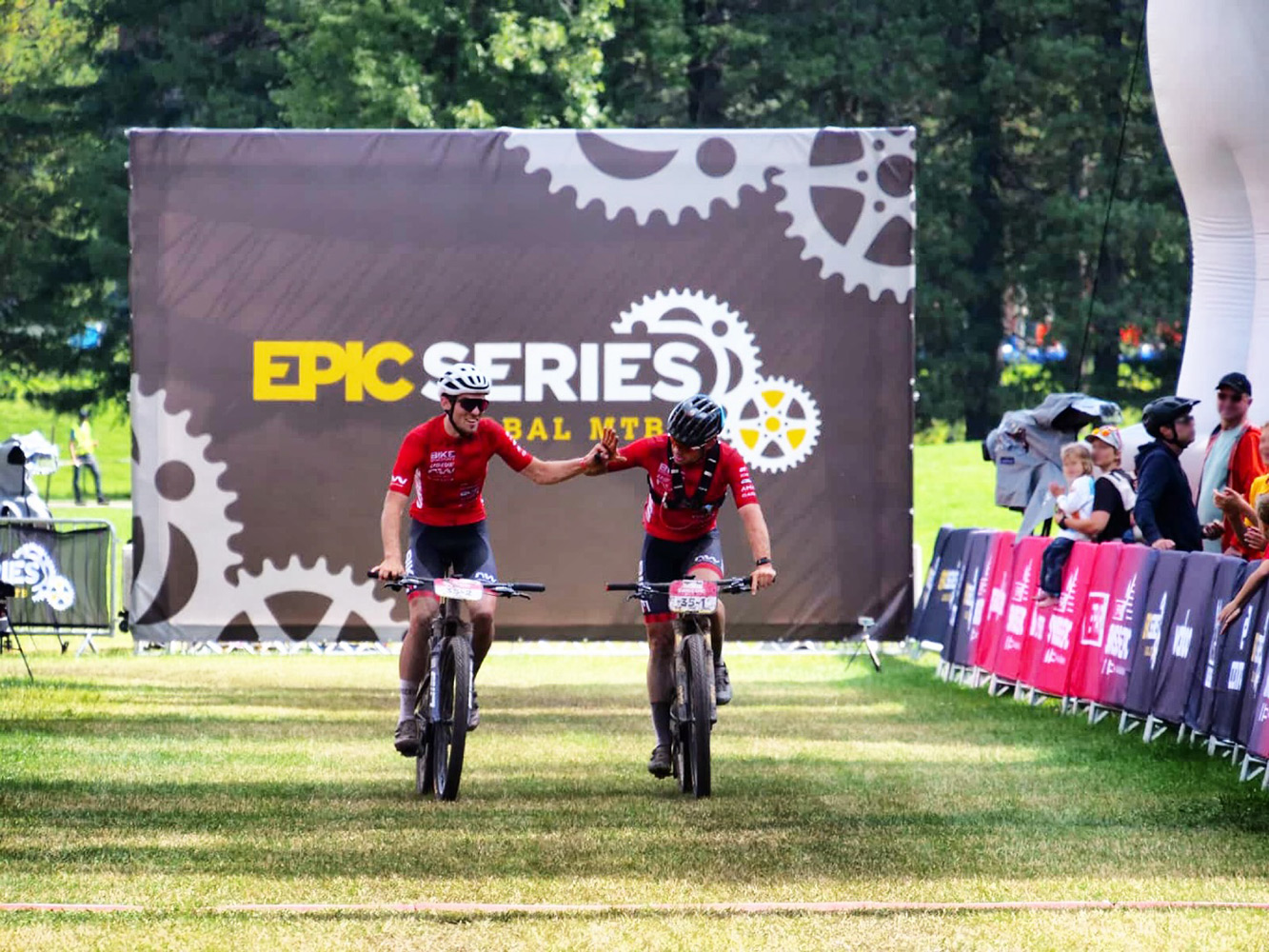
From kilometer 30 to the finish, it was uphill again – one last test of our legs and mindset. We crossed the line in Davos – exhausted but proud.
Stage result: 31st
Overall standing: 29th
Most importantly: we finished all five stages and earned the Epic Legends badge. For Niclas, it was the fourth Epic Series event. For Aaron, the third – but without a doubt, the most meaningful.
Gear and Nutrition – Our Key to Success
Fitness alone doesn’t get you through five days of Swiss Epic. You need a setup you can trust – and ours worked flawlessly.
We rode the new Continental Dubnital Race Rapid 2.4 tires. Five tough stages, zero punctures, incredible grip even in wet conditions – and lighter than many competing models. Especially on technical downhills, they gave us the confidence we needed.
Our hydration system was the USWE Race 2.0 pack, which kept us fueled without bouncing around. On long descents or between feed zones, it made a huge difference.
For nutrition, we trusted Amacx. We aimed for roughly one liter of fluid with 120 grams of carbs per hour – ideal for the high demands. The Turbo Drink Mix went in our bottles, and before technical sections or climbs, we added a Turbo Gel with caffeine. We never hit the wall – not once due to poor fueling.
Our bikes? The Scott Spark – light, stiff, and incredibly agile on the downs. Paired with Northwave apparel, the Garmin Edge MTB, and a strategy built on consistency over risk, our entire setup came together as one well-balanced system.
This wasn’t just about riding smart – it was about preparing smart.
Final Thoughts – A Race That Stays With You
The Swiss Epic is more than a mountain bike race. It’s an adventure, a physical and mental challenge – and an experience that stays with you long after the legs have recovered.
The trails of Engadin, the climbs around Davos, the infamous Scalettapass, the weather swings – this race has a character of its own.
We struggled, pushed through, laughed, and finished. And maybe that’s the real takeaway: It’s not the result that stays with you, but the moments you live along the way.
Swiss Epic 2026 – we’ll be back.