
Gravel bikes stand for freedom.
For adventures on asphalt, gravel, forest roads, or completely new paths.
But whether you’re racing, planning a bikepacking tour, or simply enjoying your after-work ride – the tire determines comfort, control, and speed.
No other component influences ride behavior as much as the tire. It is the direct connection between you and the ground – and it defines how efficient, safe, and enjoyable your gravel experience will be.
In this article, we show you what to look for when choosing a tire, why wider tires are often even faster off-road, and which models from Continental, Schwalbe, Pirelli, Vittoria, Maxxis, Zleen and Hutchinson are the best options.
Contents
Why Tire Choice Is So Crucial
The wrong tire can feel like riding with the brakes on:
Too much rolling resistance on asphalt, too little grip on gravel, or constant punctures on rough terrain.
The differences are measurable. Tests from BicycleRollingResistance.com show that rolling resistance between different gravel tires can vary by more than 10 watts at the same pressure and speed.
That means: with the right choice, you ride more efficiently – or simply faster with the same effort.
But gravel riding isn’t just about pure efficiency. Tires influence how well you absorb bumps, how confident you feel in corners, and how long you can ride without fatigue.
In short: tire choice determines whether your gravel bike comes alive – or just rolls along.
The Three Pillars of Tire Selection
1. Tire Width – More Than Just Personal Preference
Width is the most important factor when choosing a tire. It affects not only comfort, but also rolling resistance – often in ways that surprise riders.
Narrow tires (35–40 mm) Narrower tires are lighter and usually roll slightly more efficiently on smooth asphalt. They are the right choice if you ride a lot of road or hard, fast surfaces.
Downside: They require higher pressure and offer less damping – on rough surfaces, this means loss of energy and comfort.
Wide tires (42–50 mm) This is where true gravel character begins. Wider tires can be run at lower pressure without bottoming out. This allows them to absorb bumps better and maintain stable ground contact.
This improves not only comfort and control, but actually reduces energy loss on gravel.
2. Why Wide Tires Are Often Faster Off-Road
On asphalt, rolling resistance from tire deformation is the dominant factor – narrow tires have an advantage here due to smaller frontal area and less air displacement.
Off-road, however, a different factor dominates: impedance losses.
This is energy lost through vibrations and micro-impacts as bike and rider travel over uneven surfaces. Every bump forces you to waste energy vertically instead of moving forward.
Wider tires can be run at lower pressure, allowing them to absorb irregularities rather than transmit them to the rider. This saves energy, improves traction – and makes you effectively faster on rough terrain.
In short:
- On asphalt, narrow is often more efficient.
- On gravel or forest roads, wide is more comfortable, more controlled, and often even faster.
Only on very soft surfaces (e.g. sand, mud) does the flotation effect become decisive – where the larger contact patch prevents sinking in.
But on typical gravel, it’s lower pressure and reduced impedance that give wider tires their advantage.
3. The Sweet Spot: 45 mm – The Golden Middle
If you don’t want to commit to one surface type, a tire around 45 mm wide (700 × 45C) is the perfect compromise.
This size is considered the sweet spot in gravel riding:
- Fast enough on asphalt
- Safe and comfortable on gravel
- Plenty of grip on loose surfaces
- Fits easily into almost all gravel frames
Many manufacturers now design their gravel bikes specifically around this size.
Frame, Rim, and Compatibility – Not Every Tire Fits Everywhere
Before choosing a tire, check whether your frame and rims can accommodate it.
Frame clearance:
- At least 5 mm of clearance per side should remain between tire and frame.
- Most modern gravel bikes are designed for 45 mm tires (sometimes up to 50 mm).
- Older cyclocross or all-road bikes often only allow 38–40 mm.
Rim internal width:
Wide tires need wide rims to remain stable. As a rule of thumb:
- 35–40 mm tires → 19–21 mm rim width
- 42–48 mm tires → 23–25 mm
- 50 mm+ tires → 25 mm or more
- Too narrow a rim distorts the tire, making handling feel unstable or “tippy.”
Tubeless compatibility:
Tubeless is almost standard in gravel riding. Ditching tubes saves weight, reduces punctures, and allows lower pressures – meaning more grip and comfort.
Narrow Tires – Fast on Asphalt and Hardpack
If you ride a lot of pavement or firm surfaces, narrow, lightly treaded tires are ideal. They roll efficiently, have low air resistance, and feel sporty and direct.
Continental Terra Speed
The benchmark for efficient gravel tires. In tests by BicycleRollingResistance.com, rolling resistance was just 17 W (40 mm version) – absolute top class. Its fine tread offers excellent grip on firm gravel while remaining almost as fast as a road tire on asphalt.
- Use case: Racing, commuting, fast rides
- Advantages: Very light, extremely efficient, Tubeless Ready

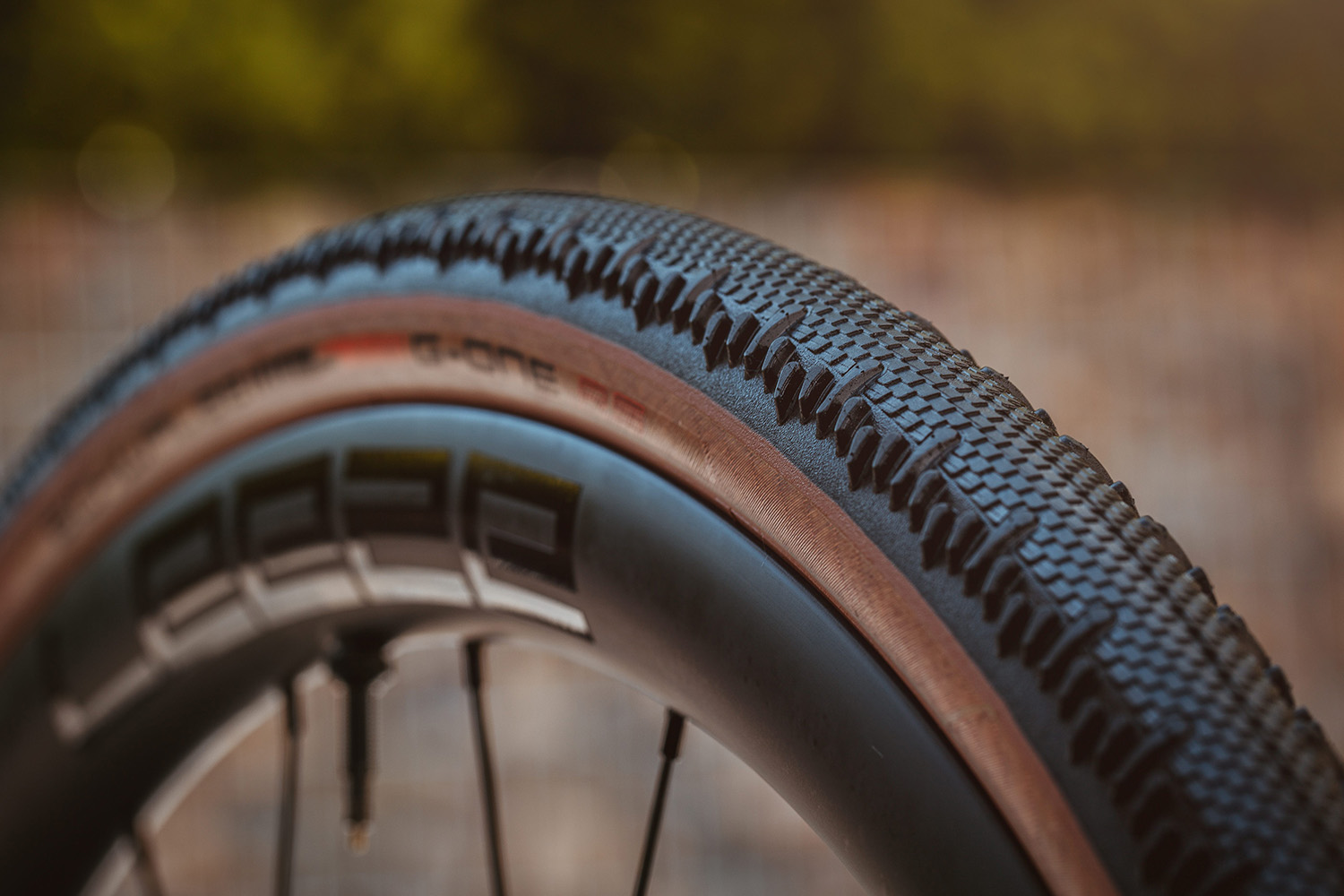
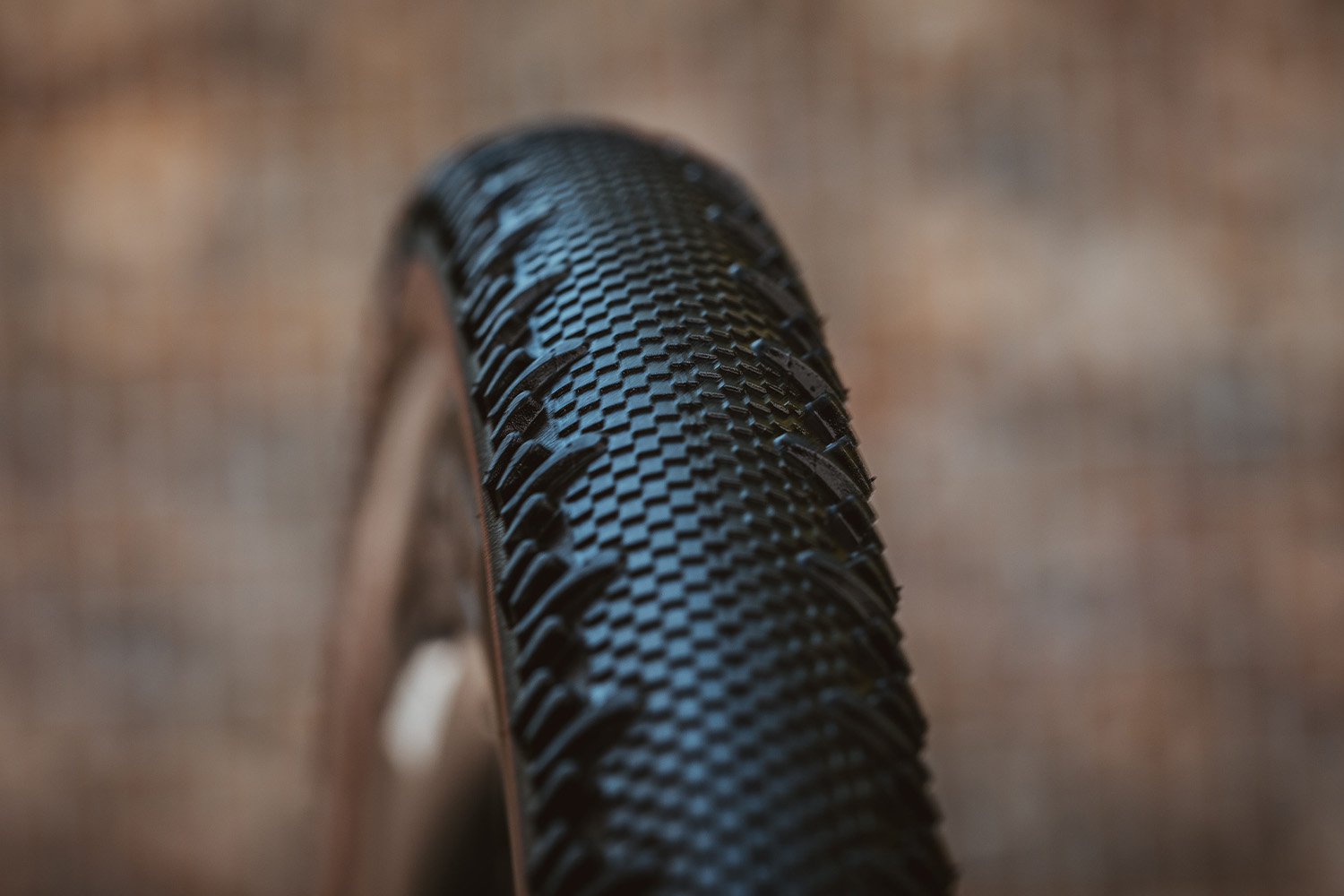
Schwalbe G-One RS
Schwalbe’s race version of the popular G-One. The slick center minimizes friction, while fine side knobs provide cornering grip.
With around 19 W rolling resistance, it’s perfect for riders wanting gravel speed with road performance.
- Use case: Speed-focused gravel, marathon, mixed surfaces
- Advantages: Fast, light, versatile
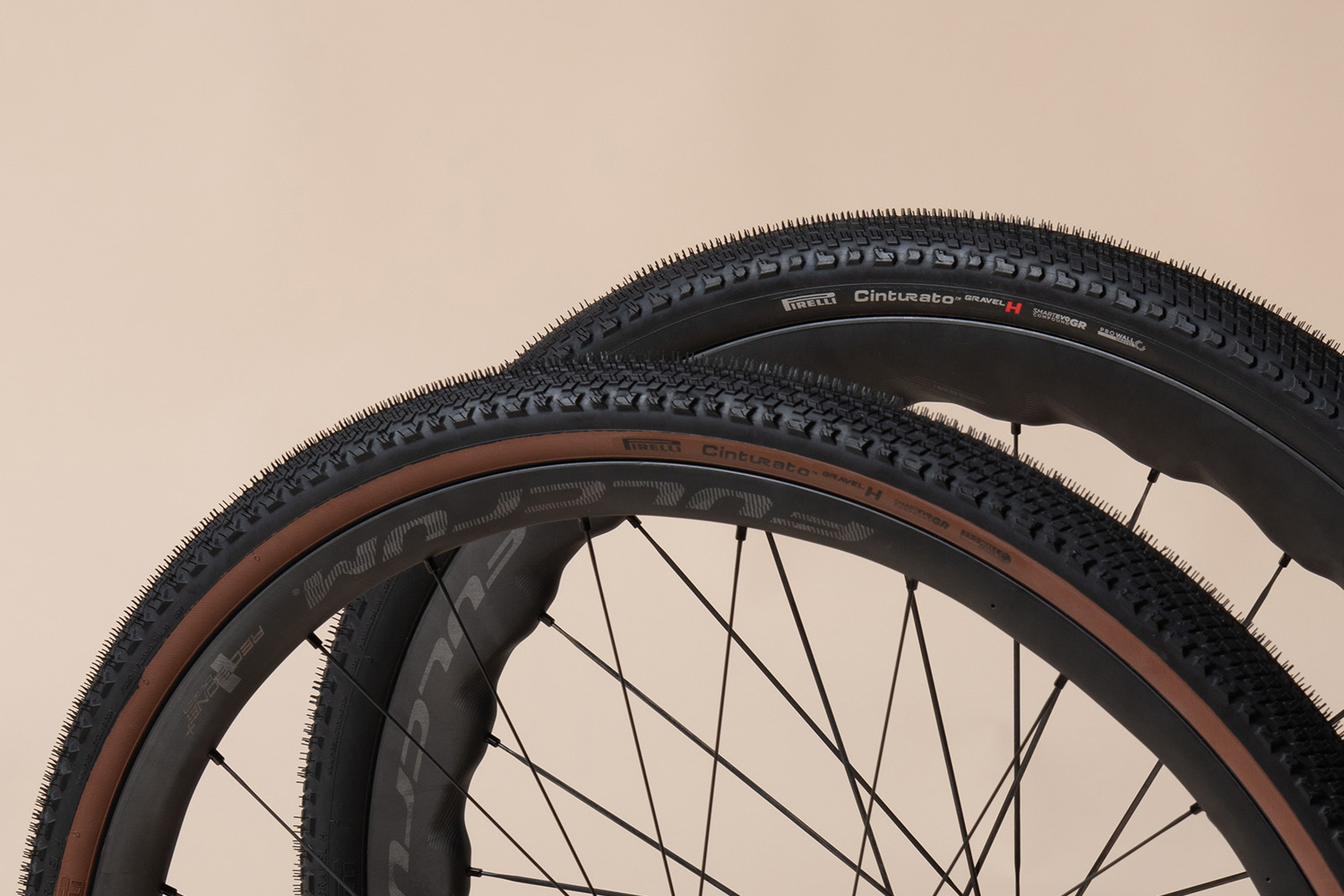
Pirelli Cinturato Gravel H (Hard Terrain)
Designed specifically for hard, dry terrain.
Fine tread, robust casing, high durability. With around 19.8 W rolling resistance (45 mm), it offers an excellent balance of efficiency and protection.
- Use case: Long rides on asphalt, hardpack, fine gravel
- Advantages: Very puncture-resistant, durable, reliable grip even in wet conditions
Wider Tires – Control, Comfort, and Speed Off-Road
Once the pavement ends, wider tires show their strengths.
Run at lower pressure, they absorb bumps, provide traction on loose surfaces, and keep you riding longer without fatigue.
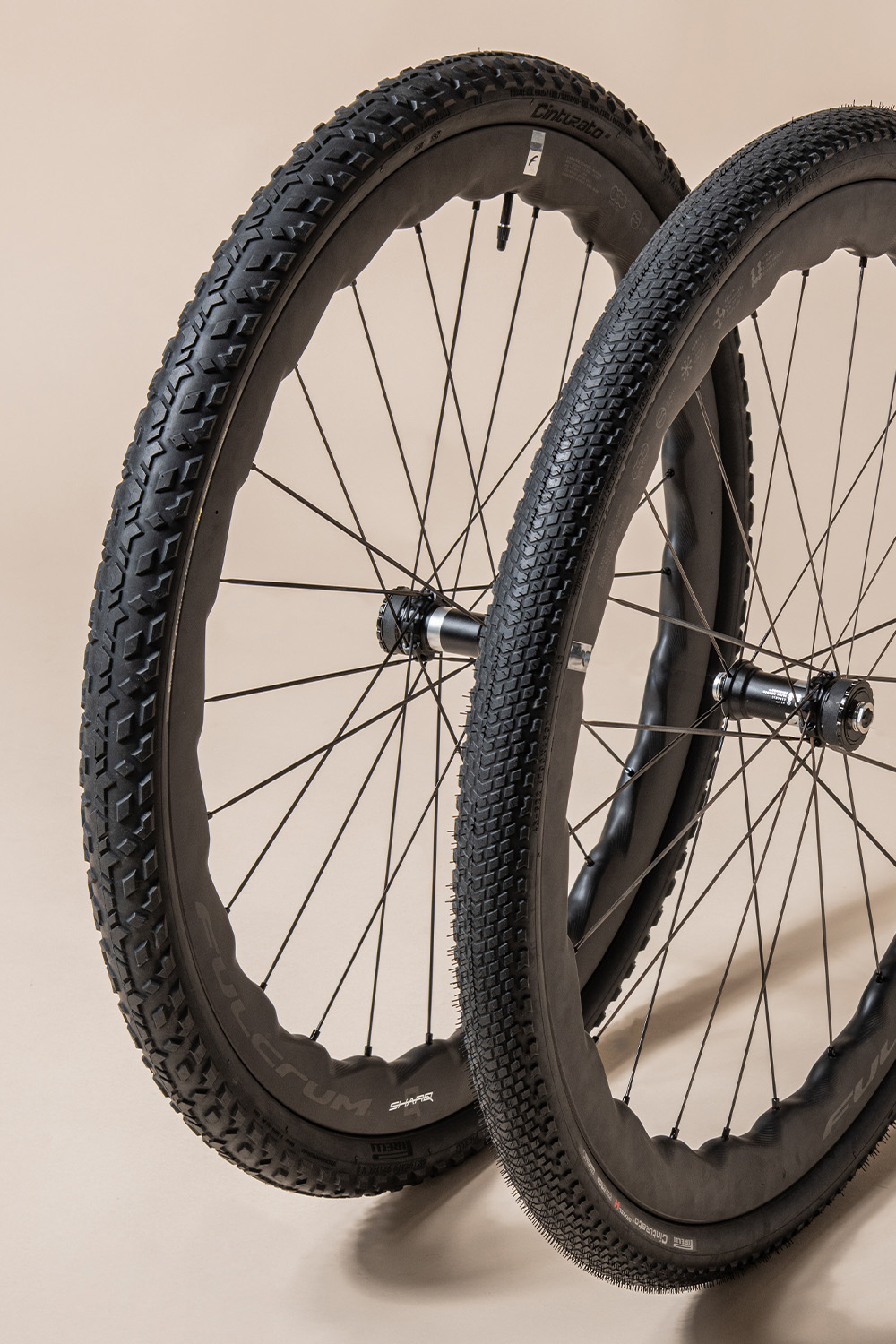
Pirelli Cinturato Gravel M (Mixed Terrain)
The all-rounder of the Cinturato line. Slightly more aggressive tread, plenty of grip, yet still efficient.
With 21.7 W rolling resistance, it remains quick on the road while offering significantly more traction off-road.
- Use case: Gravel, farm roads, bikepacking
- Advantages: Versatile, robust, Tubeless Ready
Vittoria Terreno Dry
For dry, fast routes: a smooth center strip for easy rolling, angular side knobs for cornering grip.
Vittoria’s Graphene compound ensures consistent grip even with temperature changes.
- Use case: Dry conditions, gravel racing, dirt roads
- Advantages: Fast, precise, stable
Maxxis Rambler EXO/TR
For those who love real terrain: the Rambler offers aggressive tread, reinforced sidewalls, and excellent control.
At around 25 W rolling resistance (40 mm), it’s not the fastest on asphalt – but unbeatable when terrain gets rough or technical.
- Use case: Bikepacking, trails, rough terrain
- Advantages: Robust, durable, very grippy
Hutchinson Touareg Hardskin
The endurance runner among gravel tires.
With reinforced Hardskin casing, it reliably protects against cuts and punctures. The tread balances center speed with side grip – perfect for long, varied tours.
- Use case: Touring, all-road, bikepacking
- Advantages: Stable, puncture-resistant, comfortable

Which Width Fits Your Bike?
| Tire width | Recommended rim width | Use case |
| 35-40 mm | 19-21 mm | Road, asphalt, light gravel |
| 42-48 mm | 23-25 mm | All-round, mixed terrain |
| 50 mm+ | 25-28 mm | Trail, bikepacking, off-road |
Tip: If unsure, go with 45 mm – the sweet spot for almost all gravel bikes.
Checklist: How to Find Your Perfect Gravel Tire
- Terrain: Road, gravel, or both?
- Frame clearance: How wide can your frame go?
- Rim width: Does it match the tire width?
- Tubeless or tubes? Tubeless means more comfort and fewer flats
- Tire pressure: Wider tires = lower pressure (1.8–3.0 bar).
- Rolling resistance: Compare values on BicycleRollingResistance.com
- Comfort vs. speed: Decide what matters more to you.
- 45 mm as a baseline: If you ride mixed terrain, it’s almost always ideal.
Conclusion – Tires Make the Difference
Gravel riding means freedom, adventure, and variety. But you only get the best out of your bike if your tires match your riding style and terrain.
Narrow tires are light and efficient on asphalt.
Wide tires are comfortable, safe – and often faster on gravel because they lose less energy to vibrations.
With 45 mm, you hit the sweet spot: fast on the road, confident off-road, and compatible with almost every gravel frame.
Whether you choose the ultra-light Continental Terra Speed, the versatile Pirelli Cinturato Gravel M, the grippy Maxxis Rambler, or the robust Hutchinson Touareg – at Bike-Discount you’ll find the best models for your next adventure.